


Apparently, the Supreme Court stuttered.
Four years ago, in Dobbs v. Jackson Women’s Health Organization, the Court held that the Constitution does not confer a right to abortion. Writing for the majority, Justice Alito explained: “The Constitution makes no reference to abortion, and no such right is implicitly protected by any constitutional provision.” The language could hardly have been clearer. Yet four years later, a federal district judge held that the Constitution protects such a right. The decisions are irreconcilable.
Judge B. Lynn Winmill ruled in Seyb v. Members of the Idaho Board of Medicine, that the Fourteenth Amendment protects a right to what he calls “health-preserving abortion” when pregnancy poses a non-negligible risk of serious and lasting harm to a woman’s health. The Aug. 13 decision struck down Idaho’s exclusion of self-harm from its exception for abortions necessary to prevent a woman’s death. The Ninth Circuit has temporarily stayed his injunction.
Simply put, Winmill takes the Court’s rejection of a constitutional abortion right, narrows it down to nothing.
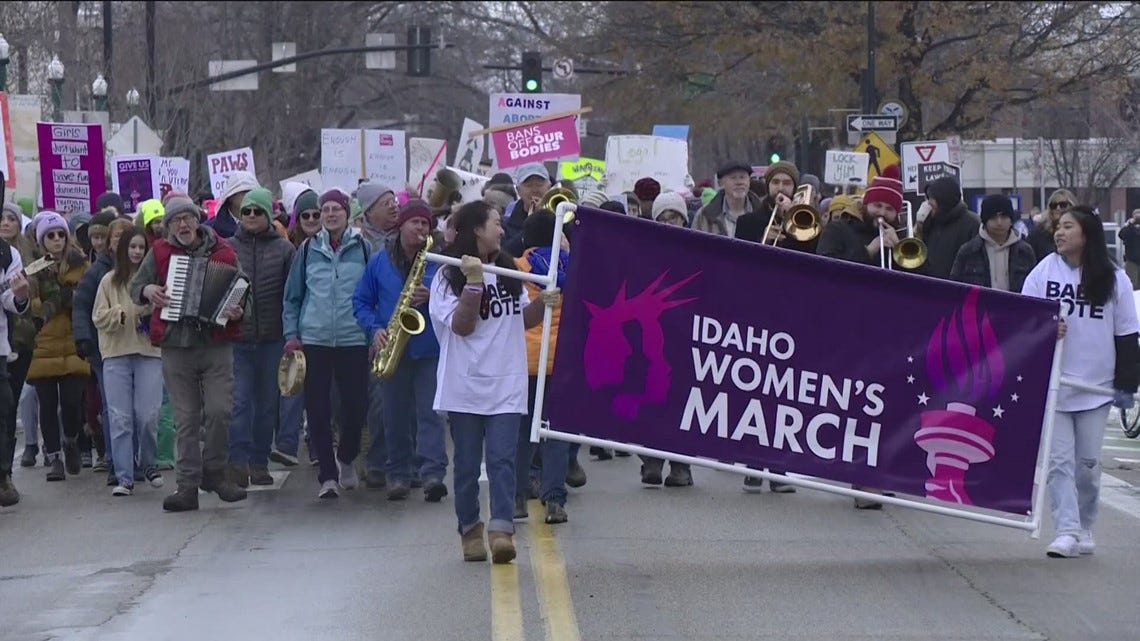
His argument rests on the term “elective.” Because the question presented in Dobbs asked whether all pre-viability restrictions on elective abortions are unconstitutional, Winmill argues that the decision “contains no analysis whatsoever of abortions performed out of medical necessity.” Under that reading, Dobbs leaves room for other previously undiscovered constitutional abortion rights outside of elective abortions if a judge defines them narrowly enough.
Winmill’s reasoning is impossible to square with what the Court actually did. Dobbs was granted on a narrower question, but the majority went further. It overruled Roe and Casey and expressly rejected all abortion as a right protected by substantive due process. Even Chief Justice Roberts criticized his conservative colleagues in the majority for going this far. The Court’s conclusion was that the Constitution does not confer a right to abortion, and authority over abortion belongs to voters and their elected representatives.
While a lower court may distinguish a Supreme Court holding, it may not reduce that holding to an announcement so narrow the Court’s decision no longer matters. Yet that is the foundation of Winmill’s analysis under Washington v. Glucksberg. He recites the proper test but stretches it well beyond its limits.
At the time of the Fourteenth Amendment’s ratification, 28 of 37 states prohibited abortion. Winmill stresses that all but one offered some exception for the mother’s life or health. This does not do the work he needs it to, as 19 states expressly permitted abortion to preserve life while only two had the broad health exceptions he supports. Exceptions like these are not constitutional rights. Winmill transforms the evidence he provides here of legislative authority into a Constitutional limit despite the Supreme Court holding that abortion is not constitutionally protected.
Attempting to bridge the gap between legislative exceptions and a constitutional right, Winmill relies on various 19th Century cases, medical writings, modern abortion practices, modern state statutes, and state constitutional decisions. While these sources may support instances of a broader exception in the realm of policymaking, they do not establish a rule in the Constitution. Dobbs noted that, when Roe was decided, 30 states prohibited abortion except to save the mother’s life. That history may support a policy case, but it does not satisfy Glucksberg.
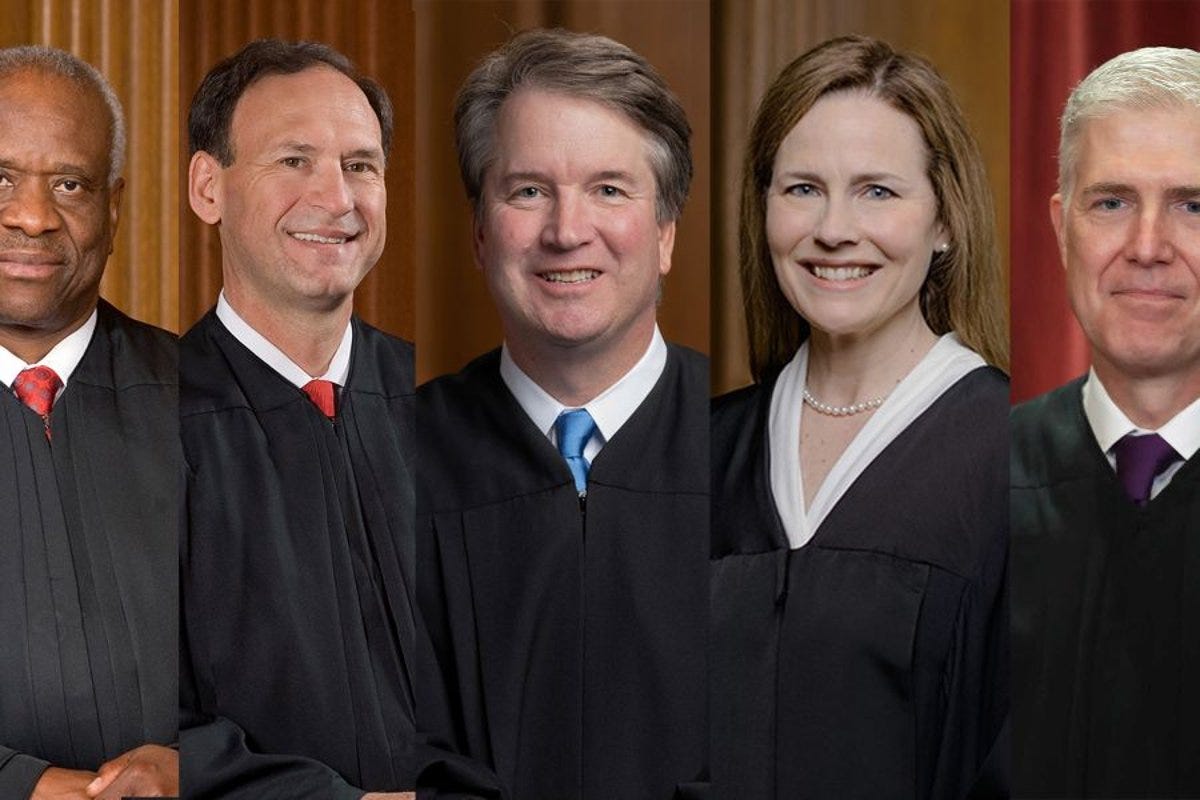
Winmill then goes on to equate “health-preserving” abortion with self-protection, comparing it to shooting an intruder or refusing to donate a kidney. But this analogy obviously misses what makes abortion different. As Dobbs explained, abortion ends what Roe previously called “potential life.” Of course, a fetus is not a violent intruder, and a law protecting that fetus is not the same as organ harvesting. While there is an argument to be made that serious health risks could justify a broader exception, the question of whether such an exception justifies ending the life of a fetus is exactly the type of policy question Dobbs returned to the people.
When Winmill creates the new right to health-preserving abortion, the rest of the opinion follows based on that newly created right. Idaho’s law treats women facing death from self-harm differently from women facing death from other medical conditions. Post-Dobbs, a law like this would be reviewed under a rational-basis test, meaning Idaho would need only a rational reason to justify the law. But Winmill says the law burdens a constitutionally protected right to “health-preserving” abortion that he just created, so he applies strict scrutiny. This requires Idaho to show that the law is narrowly tailored to a compelling interest. Without Winmill’s discovery of this new abortion right, Idaho’s concerns about assessing suicide risk and the availability of psychiatric treatment would need only to be rational.
The circumstances in Seyb are undoubtedly tragic and emotionally provoking. There are likely some conservatives who may favor a broader health exception like the one Winmill tries to outline. But the constitutional question is not whether Winmill’s policy is the best one or the most popular one. The question is: who gets to decide? Judicial restraint matters most when a judge considers a law harsh. But the task of a lower-court judge is to apply the law as it is written and as the highest court in the land has held, not as he wants it to be.
Near the end of the opinion, Winmill says opponents of another part of Idaho’s law must seek relief at “the ballot box rather than the courthouse.” Ironically, the rest of Winmill’s ruling contradicts this announcement. After Dobbs, that principle applies even when a federal judge would draw the line elsewhere. The Ninth Circuit should reverse and clarify that a lower court cannot rewrite a Supreme Court holding one adjective at a time.
Preston Hill is a senior at UNC-Chapel Hill passionate about law, media, the Supreme Court, and electoral politics. He serves as president of UNC's TPUSA chapter and was the former president of UNC College Republicans. His work has been featured in The Wall Street Journal, Fox News, Politico, Reuters, and more. He served as a congressional intern for Rep. Mark Harris and is also a case brief writer for the Undergraduate Law Review at Carolina and a contributor to the Carolina Review journal.
