


Professional speech is not a First Amendment exception.
The Court’s decision in Chiles v. Salazar (2026) unlocked a new frontier for the free speech of religious professionals. Months after the Court ruled that Colorado’s ban on conversion therapy for minors unconstitutionally restricts speech as applied to talk therapy, states are already scaling back enforcement of similar laws and rewriting statutes to avoid the same First Amendment pitfall.
The decision has reshaped the legal landscape in the short time since its decision. Michigan agreed not to enforce its 2023 ban against talk therapy and paid substantial attorney fees following a federal court order citing Chiles, Washington paused enforcement against a therapist while his case proceeds, and Colorado itself amended its statute in light of the decision. With roughly two dozen states maintaining similar restrictions, the decision has forced a reevaluation of how far licensing rules can go in regulating speech-only counseling.
A burden on protected speech is a burden on free speech. The Speech Clause starts with the presumption that ideas should be expressed, not silenced. Of course, not all speech is immune from regulation, for example, obscenity, fighting words, and libel. Constitutionally valid regulation still cannot expand past what it is specifically designed to prohibit. As my law professor would say, we do not want to catch “dolphins” (protected speech) when we are trying to catch “tuna fish” (unprotected speech). In Chiles, Colorado was fishing for dolphins — big ones with cross-necklaces and rosaries.
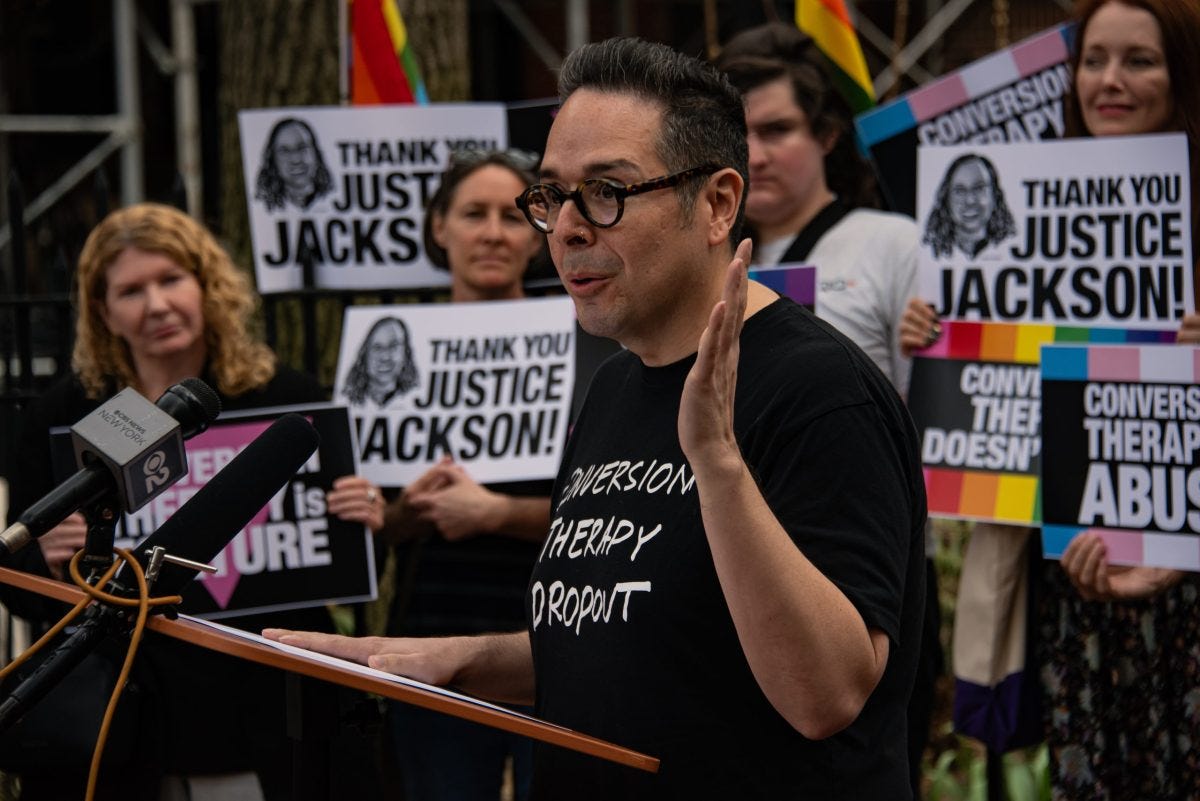
The therapist in Chiles argued that the Colorado law banning “conversion therapy” inhibited her and other therapists’ ability to counsel patients in accordance with their religious beliefs. Justice Gorsuch, writing for an 8-1 Court, astutely recognized Colorado’s law was not only content-based but also viewpoint-based discrimination, prohibiting anti-LGBTQ+ counseling while permitting pro-LGBTQ+ counseling. This was so apparent that, in Justice Kagan’s concurrence, she called this case a “textbook” example of viewpoint discrimination.
Colorado’s arguments crumbled under the opinion’s scrutiny. In one of those arguments, Colorado argued that the State has the prerogative to regulate harmful medical treatment that incidentally burdens speech, but historically speaking, whenever the State has been allowed to regulate conduct that incidentally burdens speech, the targeted conduct was unlawful, or the regulated conduct bore no relation to the professional’s speech. In Chiles, the targeted “conduct” was not unlawful. The First Amendment guarantees that one can speak according to their religious beliefs, even within the purview of one’s profession. After all, such an enshrined right does not vanish at the office doors, and Colorado lacks the authority to alter that constitutional fact through a new exception. Furthermore, state restrictions on conduct unrelated to a professional’s speech have been exercised (and rightfully so) to address other pressing needs, such as informed consent and medical licensing. None of these areas of regulation were at issue in Chiles. Without these arguments, Colorado’s true intentions reveal themselves as its masquerade fades away.
Ultimately, Colorado’s unconstitutional ban on conversion therapy was to do one thing: silence Christian therapists, or to effectively remove them from the counseling profession entirely. The Court saw right through Colorado’s simple argument for a new heightened burden, a new “professional speech” standard. In fact, the Court laughed at the standard when Shannon Wells Stevenson, counsel for Colorado, raised it in oral argument. While the Court got it right this time, Chiles is likely not the last time we will see “professional speech” used as a carve-out to the First Amendment
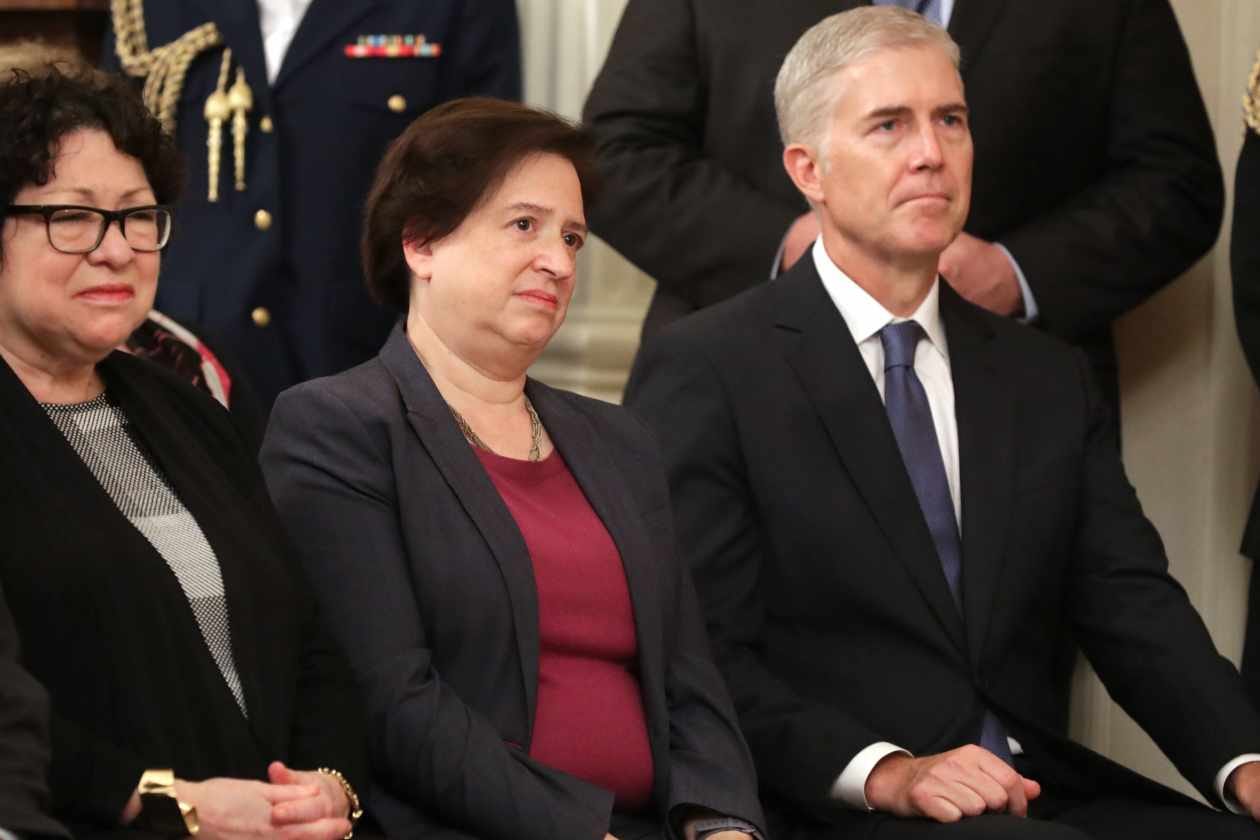
This professional speech exception has raised its head before. The same argument was used in Nat’l Inst. of Family & Life Advocates v. Becerra (2018). Writing for the Court, Justice Thomas decided that it was time to put to bed the idea that there could be a lesser-protected category of speech called “professional speech.” As was the case with Becerra, the decision in Chiles reaffirms the proposition that a state employee cannot be forced into a Shakespearean Hobson’s choice: to speak or not to speak the government’s preferred message.
Furthermore, as Justice Gorsuch’s opinion noted, the Speech Clause does not particularly care who is speaking; like Lady Justice, it is blindfolded. When speech is incidentally burdened and does not face strict scrutiny, the identity of the speaker is irrelevant. Thus, it does not matter that “a licensed professional happens to be speaking.” What matters is whether the speaker’s particular viewpoint is being treated differently compared to an opposing viewpoint. Colorado did just that: It predetermined that “conversion therapy” is bad, but gender-affirming therapy is more than welcome. That historical tradition supports carving out this new standard to regulate such viewpoint-based speech would be a serious misstep, one that the Court prudently avoids.
Ultimately, Chiles is a step in the right direction. After years on defense, conservatives find themselves pushing the ball forward. The only question is how far Chiles will expand in the constitutional war for religious liberty.
Aaron Shetterly is a 3L at Liberty University School of Law and Notes and Comments Editor of the Liberty University Law Review. He has interned for Liberty Counsel and Pailin Law.
